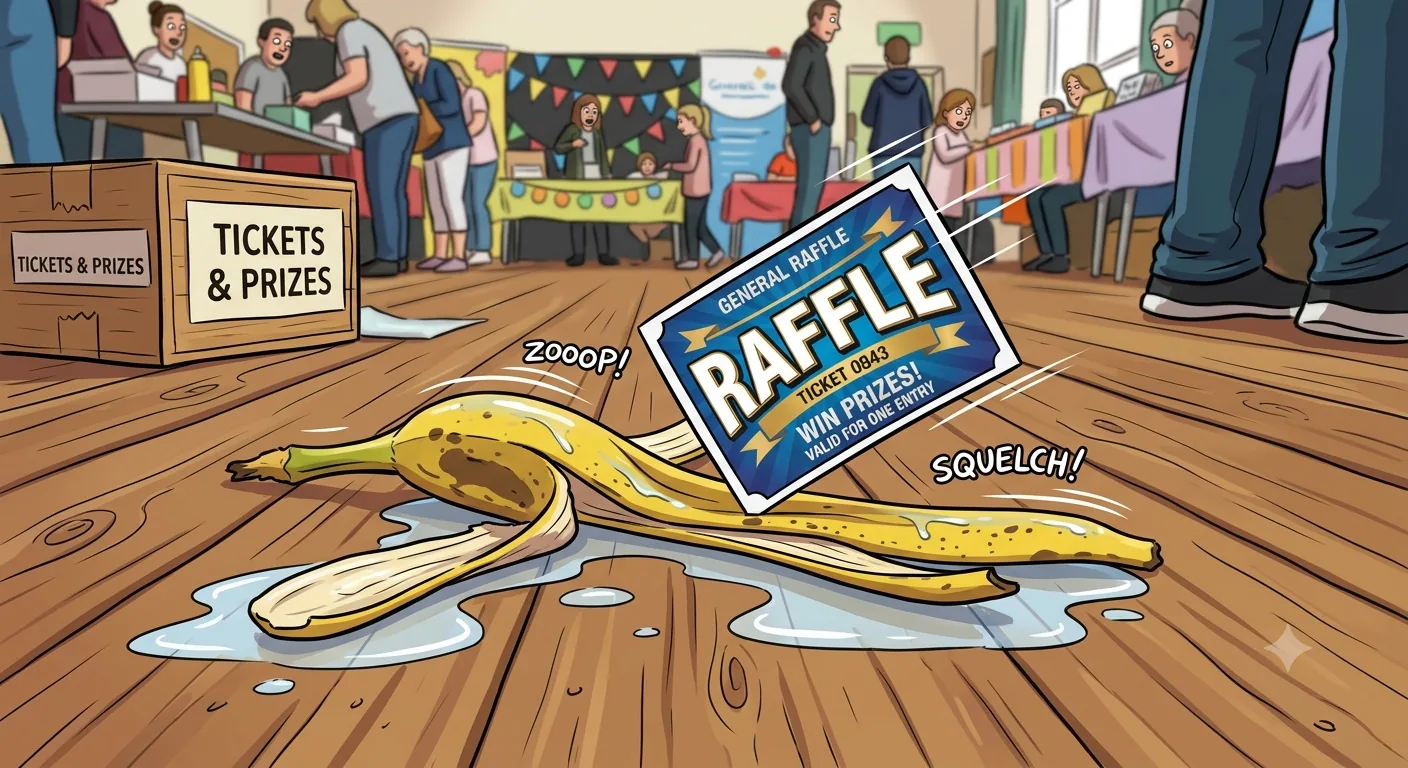
Most raffles that fall short do not fail because of bad luck. They fail because of raffle fundraiser common mistakes that are entirely preventable: planning started too late, prizes that miss the audience, promotion that stops after one post, or rules nobody wrote down. The good news is that every one of these problems has a straightforward fix. With better preparation, clearer communication, stronger promotion, and good teamwork, your next raffle can avoid the pitfalls that catch out even experienced organizers.
This guide covers the 15 most common raffle mistakes, grouped by theme, with practical solutions for each. If you are running your first raffle, keep our step-by-step guide to raffles for small fundraisers open alongside it.
Starting the Planning Process Too Late
Mistake 1: The compressed timeline. A raffle planned in a fortnight forces rushed decisions everywhere else: sponsors get one hurried email instead of a proper ask, volunteers are recruited at the last minute, and promotion has no runway. Warning signs include missed permit deadlines, a prize list still open a week before launch, and volunteers hearing about their roles on the day.
How to avoid it: Work backwards from your draw date and give yourself six to eight weeks for a community raffle. A simple timeline keeps everyone honest:
For a full walkthrough of every stage, see our step-by-step guide to hosting a raffle online.
Choosing the Wrong Prizes
Mistake 2: Prizes your audience does not want. A donated prize is not automatically a good prize. Golf clubs at a school fair or a spa package for the wrong crowd will stall sales no matter how hard you promote. Low perceived value and a thin prize list have the same effect: people buy one ticket or none.
Mistake 3: One big prize and nothing else. A single major prize creates a lottery mentality. Supporters buy one ticket and stop, and those who assume they will not win do not buy at all.
How to avoid them: Do simple audience research before committing. Ask a handful of likely buyers what they would want to win, and look at what sold well at similar events. Broad-appeal prizes such as travel, dining, and experiences outsell niche items almost every time, and a tier of smaller prizes keeps casual buyers in. Our guides to creative raffle prize ideas and themes and family-friendly raffle basket ideas cover what works, and if sponsor support is thin, use these scripts and templates for asking local businesses.
Weak Promotion
Mistake 4: Announcing once and going quiet. One launch post does not sell tickets. Supporters need repeated, varied touches: prize reveals, progress updates, and a strong final push.
Mistake 5: Relying on a single channel. Social media alone, or email alone, misses a large share of your audience. No countdown strategy and soft calls to action compound the problem.
How to avoid them: Plan a promotion calendar before launch that runs across email and at least two social channels, ending with a 48-hour countdown. Every post needs one clear call to action: buy tickets, with the link. Then make that link impossible to miss. Pin it to the top of your social profiles, add it to your bios, and put a button on your website homepage. A supporter who has to hunt for the ticket page is a lost sale. At in-person events, the same rule applies to the prizes themselves: display them where every guest walks past, near the entrance or the bar, because visible prizes drive impulse ticket purchases and hidden prizes sell nothing.
Our pre-event social media playbook covers channel-by-channel tactics, and these tips for boosting digital raffle ticket sales apply across the campaign.
Unclear Rules and Instructions
Mistake 6: No published rules. Missing eligibility criteria, vague drawing details, thin prize descriptions, and no contact information all create confusion, and confusion kills conversions. Unanswered questions like "can I enter from another state?" or "how will I know if I won?" are lost sales.
How to avoid it: Publish clear rules on the ticket page before launch: who can enter, ticket price, closing time, how and when the draw happens, full prize descriptions, and who to contact with questions. Transparency builds trust, and trust sells tickets. For the draw itself, our guide to running a fair online raffle draw explains how to make the process visibly credible.
Poor Volunteer Coordination
Mistake 7: Unclear responsibilities. When nobody owns ticket sales, prize logistics, or the draw, everything becomes someone else's job. Too few volunteers, no training, and no backup plan turn small hiccups into visible problems, and overloading your two most reliable people burns them out for next year.
How to avoid it: Assign named owners for each area early: sales, prizes, promotion, draw, and follow-up. Brief everyone before launch, run a short training session for anyone selling tickets, and nominate a backup for each critical role. Watch for the warning sign of one person answering every question; that is a coordination gap, not a star performer. For the sales team specifically, our volunteer playbook for selling raffle tickets at a live event covers briefing, scripts, and on-the-night tactics.
Budget and Financial Mistakes
Mistake 8: Underestimating costs. Printing, permits, platform costs, and prize top-ups add up, and a raffle that raises less than it cost is a real and avoidable outcome.
Mistake 9: No expense tracking. Missing financial records make it impossible to know your true result, and weak sponsor planning means paying for prizes you could have had donated.
How to avoid them: Set a simple budget before you commit to anything: expected revenue at three ticket-sales scenarios, against a full cost list. Track every expense as it happens, not after the draw. Getting ticket pricing right is half the revenue equation; our guide on how to price raffle tickets for fundraising walks through the maths.
Ignoring Legal Requirements
Mistake 10: Skipping the compliance check. Raffle rules vary by state and country, and by prize value. Running a raffle without checking permit requirements is the most serious mistake on this list, because it can turn a fundraiser into a legal problem for your organization.
Mistake 11: No records or winner documentation. Some jurisdictions require records of ticket sales and winner details. Organizers who keep nothing cannot demonstrate the raffle was run properly.
How to avoid them: Before selling a single ticket, check the requirements where you operate, secure any required permits, and set up basic record keeping: tickets sold, revenue, draw details, and winner documentation. In some US states a charity sweepstakes is the compliant alternative to a raffle. This article is general information, not legal advice; when in doubt, ask your regulator or a legal adviser.
Not Measuring Results
Mistake 12: No numbers after the draw. If you do not record ticket sales, revenue, expenses, and return on investment, you cannot tell a strong raffle from a lucky one, or repeat what worked.
Mistake 13: Ignoring the softer signals. Volunteer feedback and marketing performance, meaning which posts and emails actually sold tickets, are as valuable as the revenue line.
How to avoid them: Close every raffle with a one-page results summary: tickets sold, gross revenue, total costs, net raised, cost per ticket sold, and which channels drove sales. Review it with your team while memories are fresh. If digital sales underperformed, our guide to fixing common digital raffle challenges helps diagnose why.
Learning from Every Raffle
Mistake 14: No debrief. Teams that skip the post-event review repeat the same mistakes annually. Lessons stay in people's heads and leave when they do.
Mistake 15: No follow-up with supporters and sponsors. Announcing the winner and disappearing wastes the best donor moment of the year, and prize donors who hear nothing rarely donate twice.
How to avoid them: Hold a short team debrief within two weeks: what worked, what did not, what changes next time. Collect supporter feedback with a two-question survey. Document it all and update your checklist so next year's team starts ahead. Then thank every entrant with the total raised and what it funds, and thank sponsors publicly and personally. Continuous improvement is the difference between a raffle that plateaus and one that grows every year.
Raffle Success Checklist
- Planning started six to eight weeks out
- Budget approved and expenses tracked
- Prizes confirmed and matched to audience
- Volunteers assigned with named owners and backups
- Rules and instructions published on the ticket page
- Legal requirements reviewed and permits secured
- Marketing scheduled across email and social, with countdown
- Ticket sales tracked daily against target
- Draw documented and winners recorded
- Post-event review completed and lessons documented
FAQs
What is the most common raffle fundraiser mistake?
Starting too late. A compressed timeline causes most of the other mistakes on this list: rushed prize sourcing, thin promotion, and skipped compliance checks. The most serious mistake, though, is ignoring legal requirements, so check those first regardless of your timeline.
How early should we begin planning a raffle?
Six to eight weeks before the draw for a typical community raffle. Larger prize pools, permit applications, or major sponsor asks can push that to three months.
How do we choose prizes people actually want?
Ask your audience before you commit. Poll a handful of likely ticket buyers, review what sold well at similar events, and favor broad-appeal prizes such as travel, dining, and experiences over niche items. Add a tier of smaller prizes so more people win.
How many volunteers do we need?
Enough to cover five named roles: ticket sales, prizes and sponsors, promotion, the draw, and follow-up. For a small raffle one person can hold two roles, but every role needs an owner and a backup.
Should we review raffle results after the event?
Yes, every time. A one-page summary of tickets sold, revenue, costs, and net raised, plus a short team debrief, is the cheapest improvement tool you have.
How can we improve next year's fundraiser?
Document this year's lessons while they are fresh, update your checklist, keep sponsor and supporter thank-yous warm, and start next year's planning from the debrief notes rather than from scratch.
Plan a More Successful Raffle with GalaBid
GalaBid helps nonprofits organize raffle ticket sales, manage campaigns, promote fundraising, and track results with tools designed to reduce common fundraising mistakes. Explore the online raffle software trusted by thousands of nonprofits, schools, and clubs.
More advice articles about Raffle
About GalaBid
Ideal for donations. Perfect for Raffles. Awesome for Live and Silent Auctions! GalaBid’s online fundraising platform is designed for fundraisers of all types and sizes. For over 10 years we’ve been helping non-profits, charities, community clubs, churches, schools, and individuals to raise more and make a difference.