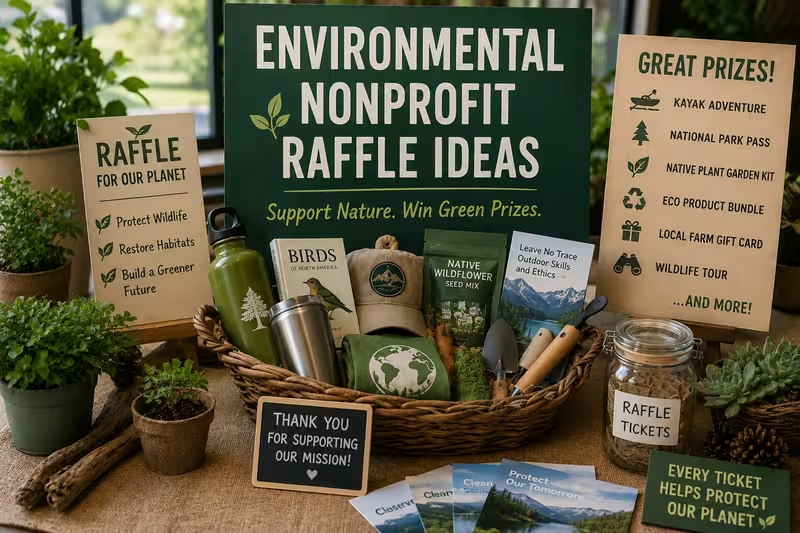
An environmental nonprofit raffle can do more than raise money. When the prizes, partnerships, promotion, and fundraising goal reflect the organization's mission, the raffle can also help supporters connect with conservation in a practical and memorable way.
A wildlife organization might raise funds for habitat restoration with a raffle featuring a guided wildlife tour. A park foundation could offer outdoor experiences while raising money for trail improvements. A community environmental group might partner with local nurseries, farms, bicycle shops, or environmentally focused businesses to assemble prizes without purchasing everything itself.
Current fundraising guidance supports keeping eco-friendly events practical. Organizations such as the RSPCA recommend reducing waste by reusing materials, avoiding unnecessary single-use items, and replacing paper invitations with digital communication where possible. More broadly, current nonprofit raffle guidance emphasizes prizes with strong audience appeal and low acquisition costs, making donated local experiences particularly useful for environmental organizations.
The strongest campaigns aren't necessarily the ones with the most prizes. They connect an appealing fundraising experience to a specific environmental outcome supporters can understand.
Why Raffles Work for Environmental Nonprofits
Environmental organizations often have highly tangible missions. Supporters can understand what it means to restore a trail, plant native vegetation, protect wildlife habitat, provide environmental education, or clean up a local waterway.
A conservation raffle fundraiser can turn that connection into an accessible way to support the work.
Raffles can also introduce organizations to new supporters. Someone may initially participate because they want to win a kayaking trip or garden package, then learn more about the organization's mission through the campaign.
Online participation can extend that reach further where applicable raffle laws allow it. Digital tickets and online promotion can make participation easier while reducing reliance on printed materials.
Different organizations can build their raffle around different goals:
Environmental OrganizationSuitable Raffle GoalPrize DirectionConservation or wildlife groupHabitat restoration or wildlife protectionWildlife tours, nature photography, outdoor experiencesClimate-focused organizationEnvironmental education or community programsLocal experiences, cycling packages, durable reusable goodsCommunity environmental nonprofitCleanups, gardens, trails or park improvementsGardening packages, local business prizes, park experiences
The key is alignment. Your prize doesn't have to directly fund conservation, but supporters should be able to understand why it belongs in a fundraiser for your organization.
Nature and Outdoor Experience Prizes
Experiences are an excellent starting point for eco-friendly raffle prizes because they can connect participants with the landscapes, wildlife, and communities the nonprofit works to support.
They can also create partnership opportunities with local tourism and outdoor recreation businesses.
Consider these nature-focused prizes:
- Guided nature walk
- Local hiking tour
- Guided kayaking trip
- Weekend camping package
- Wildlife-watching tour
- Birdwatching experience
- Nature photography workshop
- Botanical garden membership
- Local park or recreation pass
- Eco-lodge or nature retreat stay
- Outdoor skills workshop
- Guided stargazing experience
Prioritize local donated experiences where possible. A nearby guide, park partner, photographer, or recreation business may be willing to contribute an experience in return for appropriate sponsor recognition.
Experiences also give you something interesting to promote. Instead of simply posting a picture of a product, you can tell supporters what the winner will actually get to do.
“Win a guided morning wildlife walk through one of our region's most beautiful natural areas” creates a clearer story than “Win an environmental prize.”
Eco-Friendly Product Prize Ideas
Physical products can still work well in a green raffle fundraiser, but choose them thoughtfully.
Avoid buying products simply because they're marketed with words such as “green,” “natural,” or “eco.” Consider usefulness, durability, sourcing, packaging, and whether the prize genuinely fits your audience.
Potential prizes include:
- Reusable household essentials bundle
- Refillable water bottle and travel mug set
- Sustainable kitchen starter bundle
- Reusable food storage collection
- Zero-waste starter kit
- Locally made household products
- Durable reusable shopping bag collection
- Farmers market vouchers
- Locally produced food basket
- Refillable personal care bundle
- Bicycle accessory package
- Recycled or upcycled home goods
- Locally made art or crafts
- Durable outdoor picnic set
You don't need to describe every product as sustainable. If a prize has specific environmental attributes, explain those attributes accurately rather than relying on broad marketing claims.
A locally made item, for example, can simply be described as locally made. There's no need to claim that it is “100% environmentally friendly” unless you have reliable evidence to support that statement.
Gardening and Conservation Prize Ideas
Gardening prizes work particularly well for conservation groups, pollinator organizations, watershed nonprofits, community garden projects, and park foundations.
Ideas include:
- Native plant collection
- Pollinator garden starter kit
- Home composting system
- Rainwater collection kit
- Gardening consultation
- Community-supported agriculture membership
- Tree planting package
- Native seed collection
- Wildlife-friendly gardening bundle
- Local nursery gift card
- Raised garden starter kit
- Gardening tools package
- Bird habitat starter bundle
- Herb garden kit
These prizes provide another opportunity to collaborate with local businesses.
A nursery could donate native plants. A garden designer might contribute a consultation. A local farm could provide a CSA membership. A gardening organization might contribute a workshop.
PTA fundraising examples also show how plant sales and garden-center donations can combine fundraising with environmental engagement, illustrating how well gardening and community fundraising can complement one another.
More Mission-Aligned Prize Ideas
You can expand the prize selection without turning the raffle into a collection of unrelated products.
Additional ideas include:
- Annual bicycle tune-up
- Outdoor recreation store gift card
- Family nature center membership
- Environmental education workshop
- Local farm tour
- Wildlife photography print from a local artist
- Guided fishing or paddling experience where appropriate to the organization's mission
- Community gardening class
- Nature-inspired art package
- Sponsor-funded conservation experience
The best prize isn't always the most expensive. Current raffle guidance emphasizes perceived value, broad appeal, ease of use, and manageable costs when evaluating prizes.
Ask a simple question before selecting each prize: Would our supporters genuinely be excited to win this?
Working with Green and Local Businesses
A strong green business sponsorship strategy can reduce your raffle costs while expanding its reach.
Start with organizations that have a natural connection to your mission or supporters.
Potential partners include outdoor recreation companies, farms, garden centers, bicycle shops, local restaurants, nature tourism businesses, artists, environmental educators, sustainable product retailers, and other locally relevant companies.
Don't limit your request to “Can you donate a prize?”
A business could contribute in several ways.
It might donate a product or experience. It could sponsor the purchase of a larger prize. It could display a QR code promoting the raffle. It could share the campaign through its email newsletter or social media accounts. Employees could volunteer at your fundraising event.
When approaching potential partners, clearly explain your environmental mission, what the raffle will fund, who your supporters are, and how the business will be recognized.
Community nonprofit discussions also consistently highlight partnerships with businesses whose values align with the nonprofit's mission as a practical approach to sponsorship and promotion.
Connect the Raffle to a Specific Conservation Goal
“Help support our environmental work” is accurate, but it isn't particularly memorable.
Where possible, give supporters something more specific.
For example:
Help restore our community trail.
Support native habitat restoration.
Fund environmental education for local students.
Help protect wildlife habitat.
Support our annual river cleanup.
Help improve our community garden.
The campaign doesn't necessarily need to promise that every dollar purchases one specific item. The important thing is to accurately explain how the fundraiser supports the organization's work.
This gives your environmental fundraising ideas a purpose beyond the prize.
Your campaign page can explain the challenge, what your organization is doing about it, how raffle proceeds will help, and how supporters can stay involved after the drawing.
That story should appear throughout your promotion.
Running a Lower-Waste Raffle
An environmental fundraiser doesn't need to be perfectly waste-free to reflect your mission.
Focus on practical improvements.
Digital ticket sales can reduce the need for printed raffle tickets. QR codes can connect posters or event signage directly to the fundraising page. Electronic receipts and email updates can replace additional paper communication.
For physical events, consider reusable signage that can be updated for future campaigns. Avoid excessive prize packaging, and prioritize local prize collection when practical.
If food is served at an associated event, provide clearly marked recycling or composting options where those services are genuinely available.
Digital winner announcements can also reduce additional printed communication.
Environmental fundraising guidance from the RSPCA similarly emphasizes a straightforward approach based on reducing, reusing, recycling, and refusing unnecessary materials, including switching paper invitations to email, social media, or text.
Don't make the process unnecessarily complicated. A low-waste raffle should make sensible reductions without creating so much additional work that volunteers struggle to manage the fundraiser.
Promoting an Environmental Raffle
Your prize may attract attention, but your environmental mission gives people a reason to care.
Build promotion around both.
Email existing supporters when the raffle launches. Introduce the fundraising goal and show the main prize clearly.
Then continue communicating throughout the campaign.
Social media posts can introduce individual prizes, recognize sponsors, show conservation work, feature volunteers, provide fundraising updates, and remind supporters when the drawing is approaching.
Your Raffle Social Media Promotion guide can help organize these messages into a campaign.
Community newsletters can be especially useful for locally focused organizations. Ask partner businesses, volunteers, board members, environmental groups, and community organizations to share the fundraiser.
Local media may also be interested when the raffle supports a tangible community project such as restoring a park, improving a trail, creating a pollinator garden, or cleaning up a river.
Make sharing easy. Give partners a short description, campaign image, and clear instructions so they don't have to create promotional materials themselves.
Avoiding Greenwashing
Environmental nonprofits need to be particularly careful about sustainability claims because supporters may pay close attention to whether the campaign reflects the organization's values.
Avoid vague statements such as:
“100% green.”
“Completely sustainable.”
“Zero environmental impact.”
Instead, explain what you actually know.
If a prize is locally made, say that.
If a product is refillable, describe it as refillable.
If the business provides information about recycled materials, accurately attribute that information rather than expanding the claim yourself.
If you're unsure about a product's environmental credentials, don't make claims you can't verify.
Transparency is stronger than perfection.
You can acknowledge that your organization is trying to reduce unnecessary materials and choose mission-aligned prizes without suggesting that every aspect of the fundraiser has no environmental impact.
Common Environmental Raffle Mistakes
One common mistake is choosing prizes that don't fit the organization's mission or audience. A prize can be valuable while still feeling disconnected from an environmental campaign. Start with supporter interests and mission alignment.
Another problem is making unsupported sustainability claims. Verify what you say about prizes and sponsors.
An unclear fundraising goal can also weaken the campaign. Tell supporters what their participation helps accomplish.
Excessive packaging can undermine the message of a sustainable raffle, particularly when it isn't necessary. Keep presentation attractive without creating avoidable waste.
Limited promotion is another common problem. Even a strong prize won't sell tickets if supporters rarely hear about the campaign.
Finally, remember sponsor recognition. Businesses that contribute prizes or promotion are helping your organization reduce campaign costs and reach new audiences. Thank them publicly where appropriate and maintain the relationship after the raffle ends.
Environmental Raffle Planning Checklist
Before launching your campaign, confirm the essentials:
- Conservation or environmental fundraising goal confirmed
- Raffle format selected
- Applicable raffle requirements reviewed
- Audience interests considered
- Eco-friendly and mission-aligned prizes selected
- Prize sustainability claims verified
- Local experience opportunities explored
- Green and community sponsors approached
- Sponsor commitments documented
- Digital ticketing prepared
- QR codes tested if used
- Promotional schedule prepared
- Email campaign scheduled
- Social media content prepared
- Waste-reduction opportunities identified
- Volunteers assigned responsibilities
- Winner communication prepared
- Sponsor thank-you messages planned
- Campaign results will be reviewed afterward
A Charity Raffle Planning Checklist can help you incorporate these environmental considerations into the broader process of running the fundraiser.
Frequently Asked Questions
What are good prizes for an environmental nonprofit raffle?
Good options include nature experiences, guided tours, park memberships, gardening packages, native plants, outdoor recreation experiences, locally made products, reusable goods, and donated prizes from businesses that align with the organization's mission. Prioritize prizes your particular supporters genuinely want.
How can we make a raffle more eco-friendly?
Start with practical changes such as digital ticket sales, electronic communication, reusable signage, less packaging, locally sourced prizes, and QR codes where appropriate. You don't need to redesign the entire fundraiser around complicated sustainability measurements.
Where can environmental nonprofits find sponsors?
Start locally. Consider outdoor recreation businesses, farms, garden centers, bicycle shops, environmental educators, tourism providers, local artists, restaurants, nurseries, and businesses already supporting community environmental projects.
Should every raffle prize be sustainable?
Not necessarily. The overall prize selection should make sense for your audience and mission. Focus on useful, appealing prizes and avoid products that clearly conflict with your organization's values. When making environmental claims about a prize, make sure they can be supported.
How can we avoid greenwashing?
Use specific, verifiable descriptions rather than vague environmental language. Don't call a product “eco-friendly,” “green,” or “sustainable” without understanding why. Explain what you actually know about the product, experience, or business and acknowledge limitations when appropriate.
How should we explain the environmental impact of the fundraiser?
Connect the campaign to a clear and accurate goal. Explain whether proceeds support habitat restoration, wildlife protection, environmental education, trail maintenance, park improvements, cleanups, or another program. Avoid promising specific environmental outcomes unless your organization can reasonably support those claims.
Run an Eco-Friendly Fundraiser with GalaBid
A successful environmental nonprofit raffle should feel connected to the organization running it. The prizes can reflect supporters' interest in nature and sustainability, business partnerships can strengthen local relationships, and the fundraising message can show participants exactly why their support matters.
Keep the approach practical. Choose prizes people genuinely want, prioritize donated local experiences and useful products, reduce unnecessary materials, communicate environmental claims carefully, and connect the fundraiser to a specific conservation goal.
GalaBid helps environmental nonprofits sell raffle tickets online, showcase prizes, reduce reliance on paper tickets, and organize fundraising campaigns through an online raffle platform designed to make participation simple. Combined with thoughtful prize sourcing and transparent communication, that can help conservation organizations create fundraisers that support both their financial goals and their mission.
More advice articles about Raffle
About GalaBid
Ideal for donations. Perfect for Raffles. Awesome for Live and Silent Auctions! GalaBid’s online fundraising platform is designed for fundraisers of all types and sizes. For over 10 years we’ve been helping non-profits, charities, community clubs, churches, schools, and individuals to raise more and make a difference.