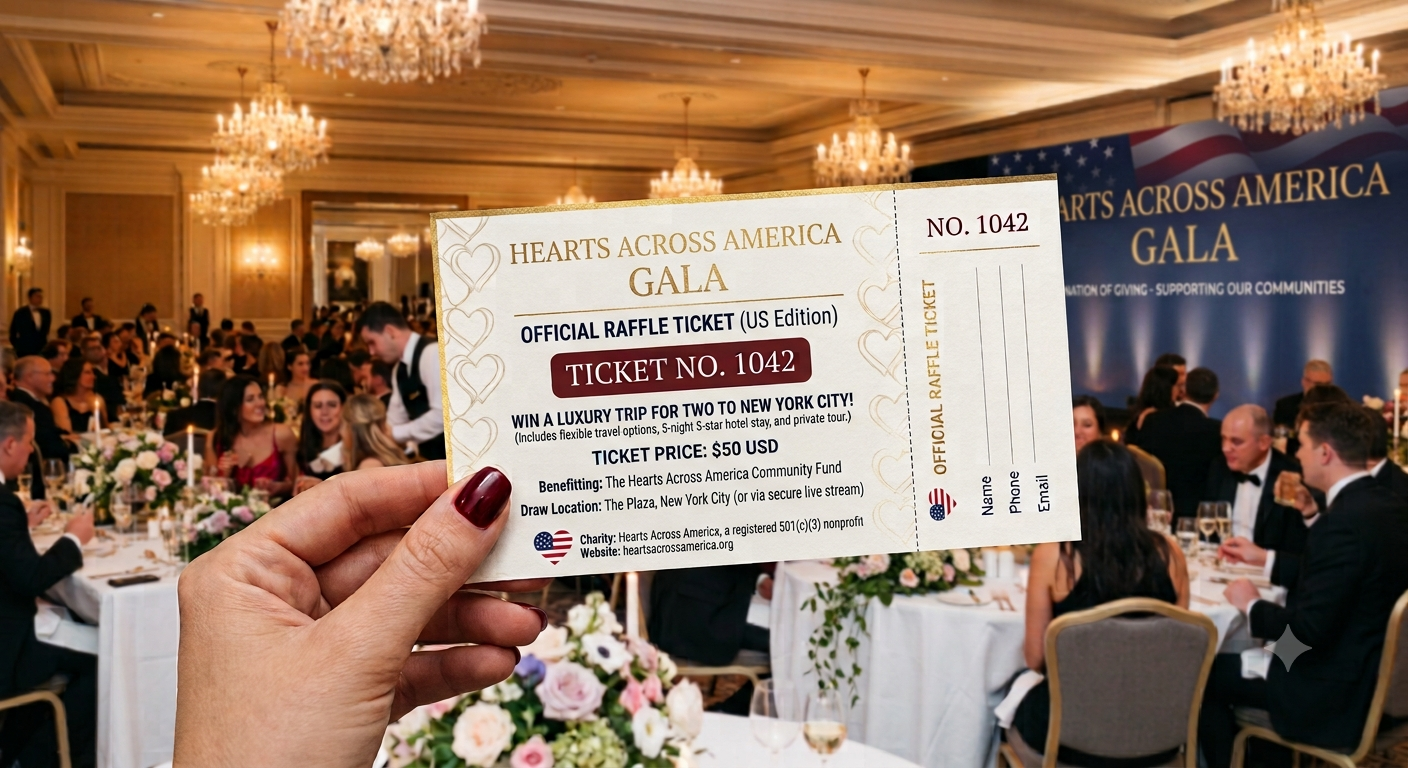
One of the biggest questions fundraisers ask before launching a raffle is how much should we charge for tickets?
Price them too high and supporters may hesitate to buy. Price them too low and you could leave significant fundraising revenue on the table.
The good news is that there's rarely one "perfect" price. Successful raffles are built around understanding your audience, the value of your prizes and making it as easy as possible for people to participate.
Here's how to find the right balance.
Start With Your Audience, Not Your Fundraising Goal
It's tempting to work backwards.
"We need to raise $5,000, so we'll sell 500 tickets at $10 each."
Unfortunately, fundraising rarely works that neatly.
The better approach is to ask:
- Who is buying the tickets?
- How well do they know your organisation?
- How much are they likely to spend?
- Are they attending an event or buying remotely?
- Are they likely to purchase once or multiple times?
A raffle aimed at corporate gala guests may support higher ticket prices than one run by a local school, sports club or community organisation. Understanding what feels like an easy purchase for your supporters should always come before setting your fundraising target.
There's No Universal Ticket Price
One of the most common misconceptions is that successful raffles all charge roughly the same amount.
In reality, pricing varies enormously.
You might see:
- $2 tickets at a school fete.
- $5 tickets at a community fundraiser.
- $20 entries for a luxury prize draw.
- $100 tickets for exclusive charity experiences.
The "right" price depends on the value supporters perceive - not simply the prize itself.
If people feel they're supporting a worthwhile cause while also having the chance to win something exciting, they'll often spend more than they would in a commercial raffle.
Consider Offering Multi-Buy Discounts
One of the easiest ways to increase fundraising income is to encourage supporters to buy more than one ticket.
Instead of selling single tickets only, create bundles that reward larger purchases.
For example:
Ticket Option Price
1 x Ticket= $60
2 x Tickets = $100
3 x Tickets = $160
4 x Tickets = $210
The perceived value encourages supporters to spend a little more while increasing the average transaction value.
Many people who intended to buy one ticket will happily upgrade if the offer feels worthwhile.
Fundraiser Takeaway: Instead of focusing on the price of a single ticket, think about the average amount you'd like supporters to spend. Well-designed ticket bundles often generate significantly more revenue than single-ticket sales alone.
Match the Price to the Prize
The prize plays an important role in determining ticket price - but perhaps not in the way many organisers think.
A high-value prize doesn't automatically justify expensive tickets.
Instead, ask whether your audience believes the opportunity represents good value.
For example:
- A luxury holiday may comfortably support higher ticket prices.
- A locally donated hamper may work better with lower-priced tickets and higher sales volume.
- Multiple smaller prizes often encourage participation because supporters feel they have a better chance of winning something.
Ultimately, supporters are donating to your cause as much as they are entering to win.
Think About Your Event Type
Different fundraising events naturally lend themselves to different pricing strategies.
Community Events
Lower ticket prices often encourage impulse purchases from families and casual supporters.
Gala Dinners and Charity Events
Guests have already committed to attending and are often in a giving mindset. This can make higher-value ticket bundles particularly effective.
Online Fundraisers
Without the excitement of an in-person event, convenience becomes even more important.
Offering digital ticket sales, quick checkout and multiple pricing options helps maximise participation.
Online fundraising platforms such as GalaBid allow organisers to sell raffle tickets alongside silent auctions, donations and Buy It Now items, making it easier for supporters to contribute in several different ways during a single campaign.
Don't Make the Choice Complicated
Supporters should never need a calculator to work out your pricing.
Simple offers are far more effective.
Compare these examples:
Simple
- $5 each
- 3 for $10
- 10 for $25
Complicated
- $4 each
- 6 for $19
- 11 for $33
- 17 for $46
Clear pricing helps supporters make faster decisions and reduces friction during checkout.
If people have to stop and calculate which option offers the best value, you've already introduced unnecessary complexity.
Fundraiser Takeaway: The easier your pricing is to understand, the easier it is for supporters to buy. Keep pricing simple enough that people can decide in seconds.
Promote Value, Not Just Price
When promoting your raffle, avoid focusing solely on the cost of a ticket.
Instead, remind supporters what their purchase helps achieve.
For example:
- Every ticket helps fund life-saving research.
- Your entry supports local community programmes.
- Every ticket helps provide meals for families in need.
- Every ticket helps give young people the opportunity to participate.
Supporters are often motivated by impact first and prizes second.
Connecting ticket sales to your mission can make the purchase feel significantly more meaningful.
Test What Works
If you run fundraising events regularly, treat each raffle as an opportunity to learn.
Track metrics such as:
- Number of tickets sold
- Average purchase value
- Most popular ticket bundle
- Total revenue
- Sales before versus during the event
Small pricing adjustments can sometimes lead to surprisingly large improvements over time.
Rather than assuming your current pricing is optimal, review the data after every campaign and refine your strategy accordingly.
Common Raffle Pricing Mistakes
Many organisations unintentionally reduce sales by making avoidable pricing decisions.
Watch out for these common pitfalls:
- Pricing tickets based solely on your fundraising goal.
- Offering only one purchase option.
- Making bundles overly complicated.
- Assuming expensive prizes always justify expensive tickets.
- Waiting until event day to begin selling.
The earlier supporters can purchase tickets, and the easier the buying process,the more opportunities you create to increase fundraising income.
Final Thoughts
There isn't a single formula for pricing raffle tickets successfully.
The best strategy balances affordability, perceived value and simplicity while reflecting the expectations of your supporters.
Offering multiple purchase options, promoting the impact of every ticket sold and making the buying process effortless will usually have a far greater effect on your fundraising than increasing the ticket price by a dollar or two.
GalaBid makes it easy to sell raffle tickets alongside auctions, donations and other fundraising activities, giving supporters more ways to contribute while providing organisers with real-time sales tracking and simplified event management.
With the right pricing strategy in place, your raffle can become one of the most reliable and profitable parts of your fundraising event.
More advice articles about Raffle
About GalaBid
Ideal for donations. Perfect for Raffles. Awesome for Live and Silent Auctions! GalaBid’s online fundraising platform is designed for fundraisers of all types and sizes. For over 10 years we’ve been helping non-profits, charities, community clubs, churches, schools, and individuals to raise more and make a difference.