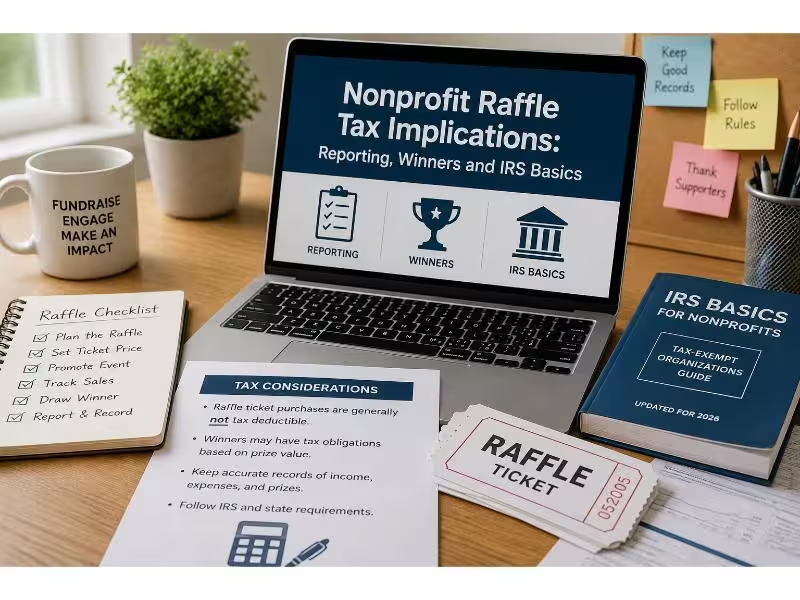
Raffles can generate valuable revenue for charities, schools, churches, and community organizations, but raising money through a game of chance can create different tax and reporting considerations than receiving a straightforward donation. Understanding the basic nonprofit raffle tax implications can help organizations maintain better records, communicate clearly with supporters, and recognize when professional tax guidance is needed.
For U.S. organizations, the IRS treats raffles as a form of gaming. Depending on how the raffle operates, how frequently gaming activities occur, who performs the work, and other circumstances, additional reporting or tax considerations may apply. State and local charitable gaming requirements can also be separate from federal tax rules.
IMPORTANT NOTE: This guide provides general educational information rather than legal, accounting, or tax advice. Organizations should consult a qualified CPA, tax professional, or appropriate authority about their specific circumstances.
Understanding How Raffle Revenue Is Treated
A nonprofit may organize a raffle to support scholarships, community programs, school activities, medical research, religious programs, or another charitable mission. However, the fact that the money will ultimately support a good cause does not automatically mean the IRS treats the raffle in the same way as a direct charitable contribution.
The IRS considers raffles a form of gaming. It also notes that gaming can be an unrelated trade or business activity under certain circumstances, although exceptions can apply. Factors such as how regularly the activity is conducted and whether substantially all the work is performed by volunteers can matter.
This is why good raffle tax reporting begins with accurate documentation rather than assumptions about how the proceeds will ultimately be treated.
At a basic level, three groups may have different responsibilities:
These responsibilities can vary according to the raffle and jurisdiction, so organizations should verify requirements before launching any raffle.
Are Raffle Tickets Tax Deductible?
This is one of the most important areas for nonprofits to communicate clearly.
Generally, purchasing a raffle ticket is not the same as making a tax-deductible charitable contribution.
The IRS specifically lists the cost of raffle, bingo, and lottery tickets among amounts that cannot be deducted as charitable contributions. The reason is relatively straightforward: the participant is purchasing a chance to receive something of value rather than simply giving money without receiving that opportunity in return.
Suppose a supporter gives a qualified charity $50 without receiving anything in exchange. That payment may potentially qualify as a charitable contribution, subject to applicable tax rules.
If the same supporter spends $50 purchasing raffle tickets, the payment generally does not become a charitable contribution simply because the raffle is raising money for a nonprofit.
Organizations should therefore avoid presenting raffle ticket purchases as automatically tax deductible.
If your campaign allows supporters to make a separate donation in addition to purchasing raffle tickets, maintain clear records distinguishing the two types of transactions. This can help prevent confusion when providing receipts or preparing financial records.
Supporters with questions about their individual deductions should be directed to a qualified tax professional rather than given personalized tax advice by raffle volunteers.
Tax Considerations for Prize Winners
Taxes don't only concern the organization running the fundraiser. A raffle winner can also have reporting responsibilities.
The IRS has specific rules covering certain gambling winnings, including winnings from raffles and charity drawings. Form W-2G, Certain Gambling Winnings, is used in circumstances where applicable reporting requirements are met. The exact reporting and withholding requirements depend on factors including the type and amount of winnings and the relationship between winnings and the amount wagered.
Because these rules can change and depend on individual circumstances, nonprofits shouldn't rely on an old threshold, from a previous raffle or another organization's raffle.
Instead, verify current IRS requirements for the year in which your raffle occurs.
For non-cash prizes, documentation of the prize's fair market value can become particularly important. Organizations should keep records explaining the prize and its value, while winners should retain any documentation they receive.
Useful winner documentation may include the prize description, prize value information, date awarded, applicable tax forms, and correspondence relating to the prize.
For a more detailed winner-focused explanation, nonprofits can direct participants to a dedicated Raffle Prize Taxes for Winners guide rather than trying to answer individual tax questions themselves.
What Changed for the W-2G Threshold in 2026?
A prize triggers Form W-2G reporting only when it meets two conditions at once: the winnings (prize value minus ticket price) reach the year's reporting threshold, and the winnings are at least 300 times the ticket price. Both have to be true.
That threshold used to be a fixed $600. Under the One Big Beautiful Bill Act, signed in July 2025, it became inflation-adjusted starting in 2026. For calendar year 2026, it's $2,000, and it will move again in 2027 and every year after. There's no single number to consider going forward, only a year to check.
Withholding runs on a separate rule and doesn't use the 300x test at all. For raffles, 24% withholding is required once winnings exceed $5,000, regardless of the ticket price.
Organizations selling tickets in bundles should also note: the IRS treats the wager proportionally. Five tickets sold for $1 counts as a $0.20 wager per ticket for these calculations, not $1.
Confirm the current year's figures directly at the Instructions for Forms W-2G and 5754 or IRS Publication 1099.
Financial Record-keeping Best Practices
Good raffle bookkeeping makes almost every other reporting responsibility easier.
The IRS requires tax-exempt organizations to maintain books and records that document the sources of receipts and expenditures reported on applicable returns. Even organizations with limited filing requirements still need records showing their activities, income received, and expenses incurred.
For a raffle, consider maintaining records covering:
Ticket sales
Track revenue generated from raffle participation and maintain records that allow your organization to reconcile campaign activity.
Prize documentation
Record each prize, whether it was purchased or donated, and maintain appropriate documentation of its value.
Expenses
Keep records of promotional costs, printing, platform expenses, purchased prizes, event expenses, and other costs associated with running the raffle.
Separate donations
If supporters can make donations without receiving raffle entries, distinguish those contributions from raffle ticket purchases.
Winner information
Maintain the documentation required for prize distribution and any applicable reporting.
Final reconciliation
After the campaign ends, compare revenue, expenses, prizes, and net fundraising results.
The IRS's own examination guidance for gaming activities looks at gross income, prizes, expenses, net income, and the records organizations maintain to document those figures.
Adding these steps to your Charity Raffle Planning Checklist before ticket sales begin can prevent organizers from trying to reconstruct financial information months later.
IRS Reporting Overview
Nonprofits shouldn't assume that because they are tax-exempt, raffle activity can simply be excluded from their organizational reporting.
The IRS classifies raffles as gaming for Form 990 purposes. Depending on an organization's activities and applicable filing requirements, gaming information may need to be included in its annual reporting. Schedule G is specifically used by qualifying Form 990 or Form 990-EZ filers to report certain fundraising and gaming activities.
There may also be circumstances where gaming activity creates unrelated business income considerations. The IRS explains that regularly conducted gaming can generally constitute an unrelated trade or business unless an applicable exception applies.
That doesn't mean every nonprofit raffle automatically creates additional tax liability.
It means organizations should maintain accurate raffle financial records and allow someone familiar with nonprofit tax requirements to determine how the activity should be reported.
A CPA can review the organization's raffle activity alongside its other fundraising and financial information when preparing annual filings.
State Tax and Reporting Considerations
Federal requirements are only one part of raffle compliance.
Raffles are also commonly regulated through state and local charitable gaming laws. The IRS itself notes that gaming is normally regulated by state and local law in the jurisdiction where the activity occurs.
Depending on the location, requirements may concern registration, permits, eligible organizations, prize limits, ticket sales, advertising, recordkeeping, or financial reporting.
Online raffles can make jurisdiction questions particularly important because supporters may encounter a campaign outside the nonprofit's immediate local area.
Before launching, review the applicable requirements and consult the relevant regulatory authority. GalaBid's Raffle Legal Requirements by State resource can provide a useful starting point, but organizations should confirm current rules rather than treating a general guide as legal advice.
Common Tax Mistakes Nonprofits Should Avoid
Many charity raffle tax problems begin with simple recordkeeping or communication mistakes rather than complicated accounting questions.
Mixing donations and raffle ticket revenue
Keep these transactions clearly identifiable. A ticket purchase that provides a chance to win isn't automatically equivalent to a charitable donation.
Assuming nonprofit status removes every tax consideration
Tax exemption doesn't mean every fundraising activity receives identical treatment.
Failing to document prizes
Keep descriptions and valuation information for both purchased and donated prizes.
Waiting until tax season to organize records
Establish your recordkeeping process before ticket sales begin.
Forgetting winner documentation
Determine what information you'll need from winners before conducting the drawing.
Tracking only net proceeds
Organizations should maintain records supporting both raffle receipts and related expenses rather than recording only the amount remaining afterward. IRS Form 990 instructions specifically address gross gaming income reporting.
Assuming last year's requirements haven't changed
Check current IRS and state guidance for each raffle.
These are also useful considerations to include when reviewing Common Charity Raffle Mistakes with your fundraising team.
Working with a CPA or Tax Professional
You don't need your entire volunteer committee to become nonprofit tax experts. You do need to recognize when professional guidance is appropriate.
Consider consulting a qualified CPA or tax professional when your organization is running a raffle for the first time, awarding valuable prizes, conducting significant gaming activity, expanding into new jurisdictions, or isn't sure how raffle revenue should appear in its financial reporting.
Prepare before the conversation. Bring records covering ticket sales, separate donations, expenses, donated and purchased prizes, winner information, previous filings, and any relevant state documentation.
Useful questions might include:
“What records should we maintain for this raffle?”
“How should we distinguish raffle proceeds from donations?”
“Does our raffle create additional federal reporting requirements?”
“What winner information should we collect?”
“Are there state reporting requirements we need to address?”
“Is there anything we should change before our next raffle?”
Professional guidance is usually more useful when your records are already organized.
Nonprofit Raffle Tax Checklist
Before closing the books on a raffle, review this basic checklist:
- Financial records are organized
- Raffle ticket sales are documented
- Separate donations are identified
- Prize descriptions are recorded
- Prize values are documented
- Purchased and donated prizes are distinguished
- Winner information is collected where required
- Applicable winner documentation is completed
- Raffle expenses are recorded
- Gross revenue and expenses can be reconciled
- Organizational financial records are updated
- Current federal requirements have been reviewed
- Applicable state and local requirements have been reviewed
- CPA or tax professional consultation is scheduled when necessary
Good documentation isn't simply about preparing for tax season. It also makes it easier to evaluate the fundraiser through your planning processes.
Frequently Asked Questions
Are raffle tickets tax deductible?
Generally, the cost of raffle tickets isn't deductible as a charitable contribution. The IRS specifically identifies raffle, bingo, and lottery ticket costs as nondeductible charitable contributions.
Do raffle winners pay taxes?
Raffle winnings can have tax implications for winners, and certain winnings may trigger reporting requirements. Winners should retain their documentation and consult a qualified tax professional regarding their individual circumstances.
What financial records should nonprofits keep?
Organizations should maintain records supporting raffle receipts, expenses, prize information, winner documentation, and other information needed for their financial and tax reporting. The IRS requires exempt organizations to keep records that substantiate income and expenses reported on applicable returns.
Do nonprofits report raffle income?
Raffles are treated as gaming activities for federal nonprofit reporting purposes, and organizations may have reporting obligations depending on their activities and filing requirements. Organizations filing Form 990 or Form 990-EZ may also encounter Schedule G requirements relating to gaming.
Should we speak with an accountant before running a raffle?
It can be particularly helpful for first-time raffles, valuable prizes, significant fundraising campaigns, or situations where the organization is uncertain about federal or state requirements. Getting advice before launch can also make record keeping easier.
How long should raffle financial records be retained?
There isn't one simple retention period appropriate for every raffle document and every organization. The IRS requires exempt organizations to retain records needed to substantiate items reported on their returns, while specific record-retention requirements can depend on the type of document and circumstances. Establish a retention policy with your accountant or tax professional rather than automatically disposing of raffle records after the fundraiser.
Manage Charity Raffles with Confidence Using GalaBid
Understanding nonprofit raffle tax implications doesn't mean nonprofit leaders need to become tax specialists. The practical goal is to distinguish raffle activity from ordinary donations, maintain accurate financial and prize records, understand that winners may have their own reporting responsibilities, and seek qualified advice when circumstances require it.
GalaBid helps nonprofits sell raffle tickets, track fundraising activity, and draw the winners, through an online raffle platform including a certified random number generator. Combining a streamlined online raffle with good financial record keeping can make it easier for your organization to run transparent raffles while giving your accountant the information needed to address applicable reporting requirements.
More advice articles about Raffle
About GalaBid
Ideal for donations. Perfect for Raffles. Awesome for Live and Silent Auctions! GalaBid’s online fundraising platform is designed for fundraisers of all types and sizes. For over 10 years we’ve been helping non-profits, charities, community clubs, churches, schools, and individuals to raise more and make a difference.