Social media suits raffles better than almost any other fundraising format, because a raffle post has everything the feed rewards: a prize photo that stops the scroll, a low-commitment ask, a deadline, and a winner moment at the end. Yet most raffle social content is the same recycled announcement, posted twice, reaching a fraction of the audience it could.
Here is what actually works, platform by platform and phase by phase. This guide covers the social channel specifically; for promoting a broader event on social, see our fundraising event social media playbook.
The three rules of raffle social content
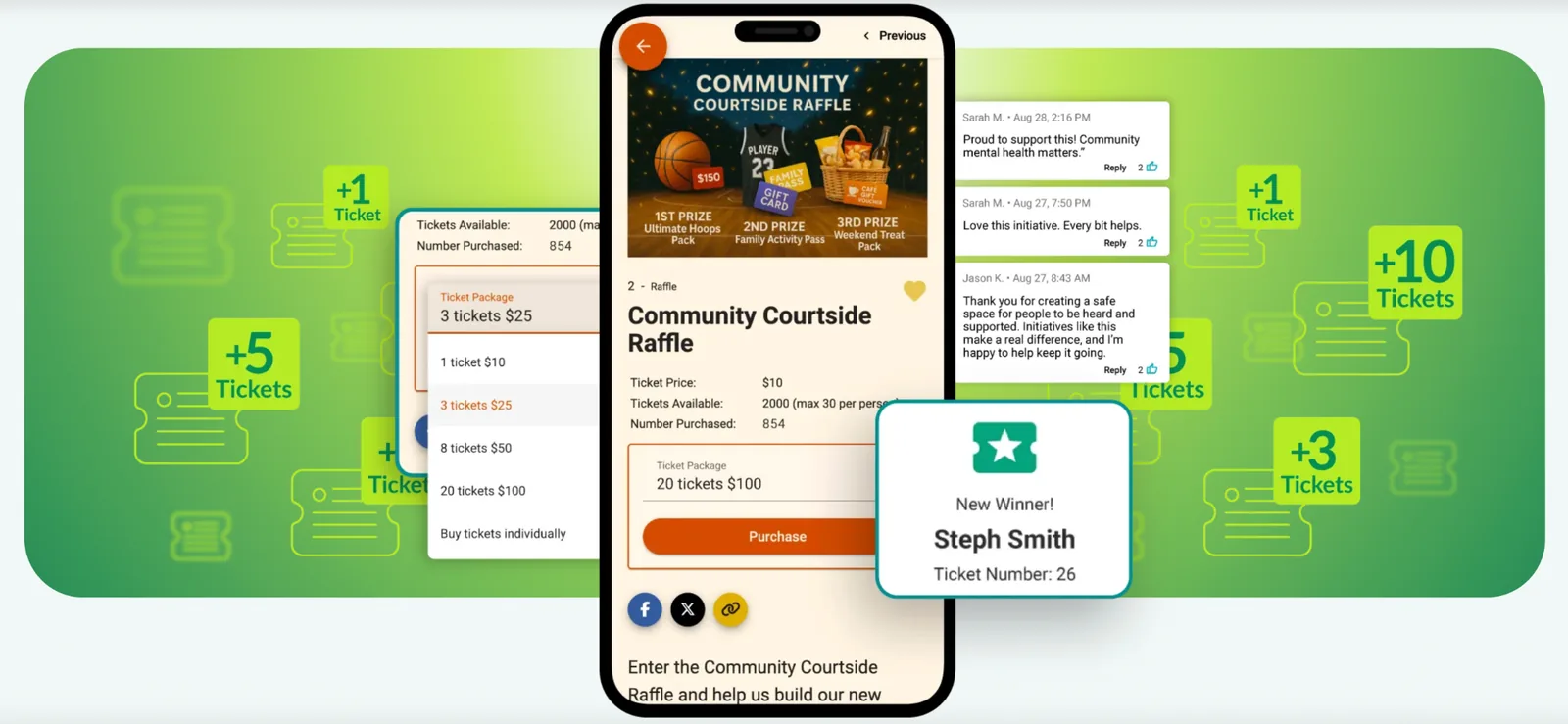
Lead with the prize, every time. The photo is the post. A crisp shot of the hamper, the holiday, the signed jersey earns the pause; your logo does not. Text overlay carries the deal ("$5 a ticket, 3 for $12") so the post works with the sound off and without the caption.
One link, everywhere, always. Every post, story, bio and reply points at the same campaign page. Do not split traffic between a Facebook event, a form and the ticket page; the page where buying happens is the only destination. Make sure it converts on a phone, since that is where all this traffic arrives; our landing page best practices cover the standard.
Post more than feels polite. Organic reach means each post is seen by a small slice of your followers, and the slice differs each time. The organiser who posts eight times across a campaign is not spamming; they are giving each follower two or three real chances to see the raffle at all.
Where raffles actually sell
Facebook community groups are the workhorse. For school, club and community raffles, the local suburb group, the school parents group and the club's own group outsell the organisation's page many times over, because that is where the audience actually is and because a raffle for the local netball club is exactly what those groups exist to share. Post personally where you are a member, follow each group's rules, and ask your committee and volunteers to share into theirs. Ten people sharing into ten groups is a distribution network no page can match.
Instagram sells the prize. Feed posts for the prize reveals, stories for the countdown and milestones, and the link sticker doing the work stories were built for. Instagram audiences skew younger than Facebook's; if your raffle prizes suit them, weight your effort here.
Your supporters' own profiles beat all of it. The single highest-converting social asset is a committee member, volunteer or known supporter posting "I bought mine, here is why this cause matters to me" with the link. Personal posts carry trust no organisational account earns. Make this easy: a short suggested caption, the prize photo, the link, sent to your inner circle at launch with a direct ask to share.
LinkedIn, sparingly. For workplace-connected raffles and corporate-sponsored prizes, one professional post from your organisation's leaders thanking the sponsor and linking the raffle does double duty: it sells tickets and delivers sponsor recognition, which is half the point of the sponsor benefits playbook.
Know the platform rules for raffles
Two compliance notes specific to social. First, most platforms have policies around promotions and gambling-adjacent content, and paid advertising for raffles can require pre-authorisation or be restricted outright depending on the platform and country; organic posting is generally straightforward, but check the current ad policies before putting money behind a raffle post. Second, run your raffle on your own campaign page, never "in" the platform (no "comment to enter" mechanics for a paid raffle); platform-native entry mechanics sit badly with raffle regulations that expect numbered tickets and auditable draws. Our charity raffle legal questions guide covers the underlying rules.
A content calendar that matches the campaign arc
Launch week: the announcement post with the full prize lineup, then a personal-share push from your inner circle, then the first prize spotlight. If you run an early bird deal, its deadline is your second post moment.
Mid-campaign: one prize reveal or spotlight per few days, a milestone post when you cross a real threshold ("half the tickets are gone"), and a cause story: one photo and two sentences on what the money funds. Mid-campaign is also when group shares from new voices matter most, because your own audience has seen the announcement.
Final 72 hours: daily countdown posts, the remaining-ticket count if you have a cap, and an exact close time in every caption. This is social's version of the countdown sequence, and the final "draw is tonight" post reliably outperforms everything before it.
Draw and after: announce the draw time, go live for it if your audience is engaged, and post the winner moment (with permission) plus the total raised. The winner-and-total post is the most shareable content of the whole campaign and the seed of next year's raffle; do not skip it because the fundraising is done.
Measure what social actually moved
Reach and likes are not tickets. Track what converts: use a distinct link or code for social where you can, watch sales spikes against your posting times, and note which groups and voices moved numbers. Those observations feed your success metrics baseline and tell you where next campaign's social effort belongs.
Give the posts somewhere to land
All of it, the prize photos, the group shares, the countdowns, funnels into one page where buying takes a minute and tickets arrive instantly by email or SMS. Set up your raffle free on GalaBid's raffle platform, grab your campaign link and QR code, and give your social content a destination that closes the sale.