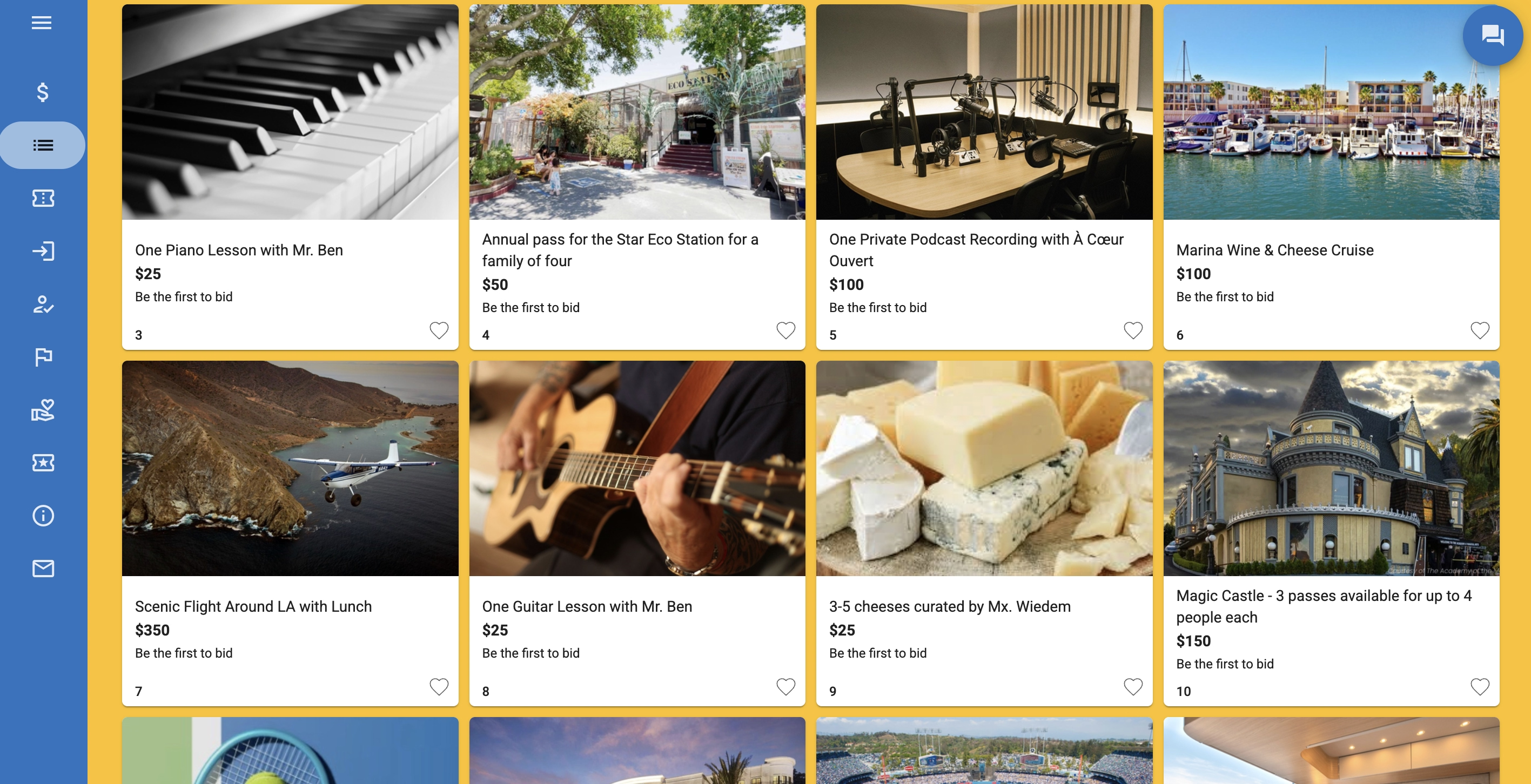
A winning silent auction catalog isn't just a list of donated items, it's a shopping experience curated for your specific audience. The right mix of item count, price range, category variety, and sequencing is what turns a room full of event guests into a room full of active bidders. Here's how to build one.
What Is a Silent Auction Catalog?
Silent auctions usually take place in conjunction with in-person events and a silent auction catalog is the full collection of items, packages, and experiences available for bidding. The catalog allows potential bidders to browse and favorite items and importantly, place bids. Traditionally this meant a printed booklet or a table of bid sheets. Today, most catalogs live online, as an online auction where bidders browse and bid on from a phone, tablet, or laptop, whether they're in the room or bidding remotely.
The catalog is more than a list - it's the interface between your donated items and your bidders' wallets. A well-organized catalog answers these questions at a glance: what items are available in categories I'm interested in and what level is the bidding starting at. A poorly organized catalog is hard to navigate and it can cause event guests' to skip the silent auction entirely.
Why a Great Auction Catalog Increases Bidding
A catalog that's easy to browse and favorite items keeps guests engaged for longer. More items are viewed, more items receive bids, and more items get competitive which is the key to successful silent auction.
Getting the catalog right is one of the highest-leverage, lowest-cost improvements you can make to a fundraising auction. Time spent creating a catalog with high quality images, compelling descriptions, in an easy to navigate format, can meaningfully change your total raised.
How to Choose the Right Auction Items
Start with the right number of items, not the most items
It's tempting to think "more items, more bids." In practice, the opposite is usually true. A catalog that's too large spreads bidder attention too thin, and a lot of items end up with one lonely bid or none at all.
Fundraising platforms differ on the exact ratio, and that's telling in itself — the right number depends on your event, not a fixed rule. As a rough guide:
Fundraiser takeaway: Pick your ratio based on how long your auction runs and how many people will actually see it. An auction where bidding takes place during a single evening needs a tighter catalog than a two-week online silent auction.
Build a price ladder, not a price cluster
One of the most common catalog mistakes is loading up on similar mid-range items and forgetting the guests who'd happily bid $30 but never $300.
If budget conscious bidders only see high-value items, they'll disengage entirely. Give everyone something realistic to chase, a catalog built around a healthy mix of items across all three tiers will outperform one stacked with items all in the same price range.
If procurement falls short of your target item count, no-risk consignment items can fill gaps across tired and tested experiences and trips without any upfront cost.
Set starting bids and increments with intention
Once your items are displayed in your catalog, pricing them correctly determines whether bidding actually gets going. A widely used approach:
- Starting bid: roughly 30–50% of the item's fair market value (FMV) - low enough to invite that first bid, high enough that the item isn't undersold.
- Bid increments: roughly 10–15% of FMV, so bidding moves at a pace that feels competitive without long gaps.
For items without an obvious retail price, ask the donor what they'd typically charge, or research comparable experiences to land on a fair estimate.
Writing Auction Item Descriptions That Drive More Bids
Even a well-priced item underperforms if its description reads like an inventory line rather than a sales pitch.
Compare:
Before: Gift voucher worth $300.
After: Enjoy an unforgettable evening of fine dining with a $300 voucher to one of the city's most celebrated restaurants, perfect for a special occasion.
The value hasn't changed. Only the story has. Bidders don't bid because they want a restaurant voucher, they bid because they can imagine themselves enjoying a special night out.
This is worth getting right on every item, and it's a big enough topic that it deserves its own deep dive: see our full guide on writing auction item descriptions that drive more bids for a complete framework and more before-and-after examples.
Organizing Categories for a Better Bidder Experience
A catalog full of restaurant vouchers, however nicely priced, will bore a room fast. Mix categories deliberately:
Category variety widens the pool of guests who'll find something worth bidding on, and keeps the browsing experience interesting rather than repetitive, especially important for a mobile catalog guests are scrolling on their phones.
If your out reach for item results in a long list, resist listing every one as its own lot. Combine related items into themed packages. A hotel voucher plus a restaurant gift card becomes a "weekend getaway." Bundling raises the perceived value of the package above the sum of its parts and turns forgettable small donations into something that photographs and sells well.
Making the catalog searchable by category also matters for bidder experience and accessibility, it helps guests using screen readers or navigating by keyboard find relevant items without wading through an undifferentiated list, and helps your team locate and hand off items at the end of the night without confusion.
Using High-Quality Photos to Increase Interest
Photos do a lot of the persuasive work a catalog can't do with text alone. They're often the first thing a bidder sees before they read a word of your description. Clear, well-lit photos from multiple angles help bidders judge quality and value at a glance, which builds the confidence needed to place that first bid. Make sure to choose a platform for your silent auction that allows multiple images per item and the ability to upload large image files. High quality images are crucial for physical items like art or memorabilia. Make sure to include multiple close ups of the piece along with the frame as applicable.
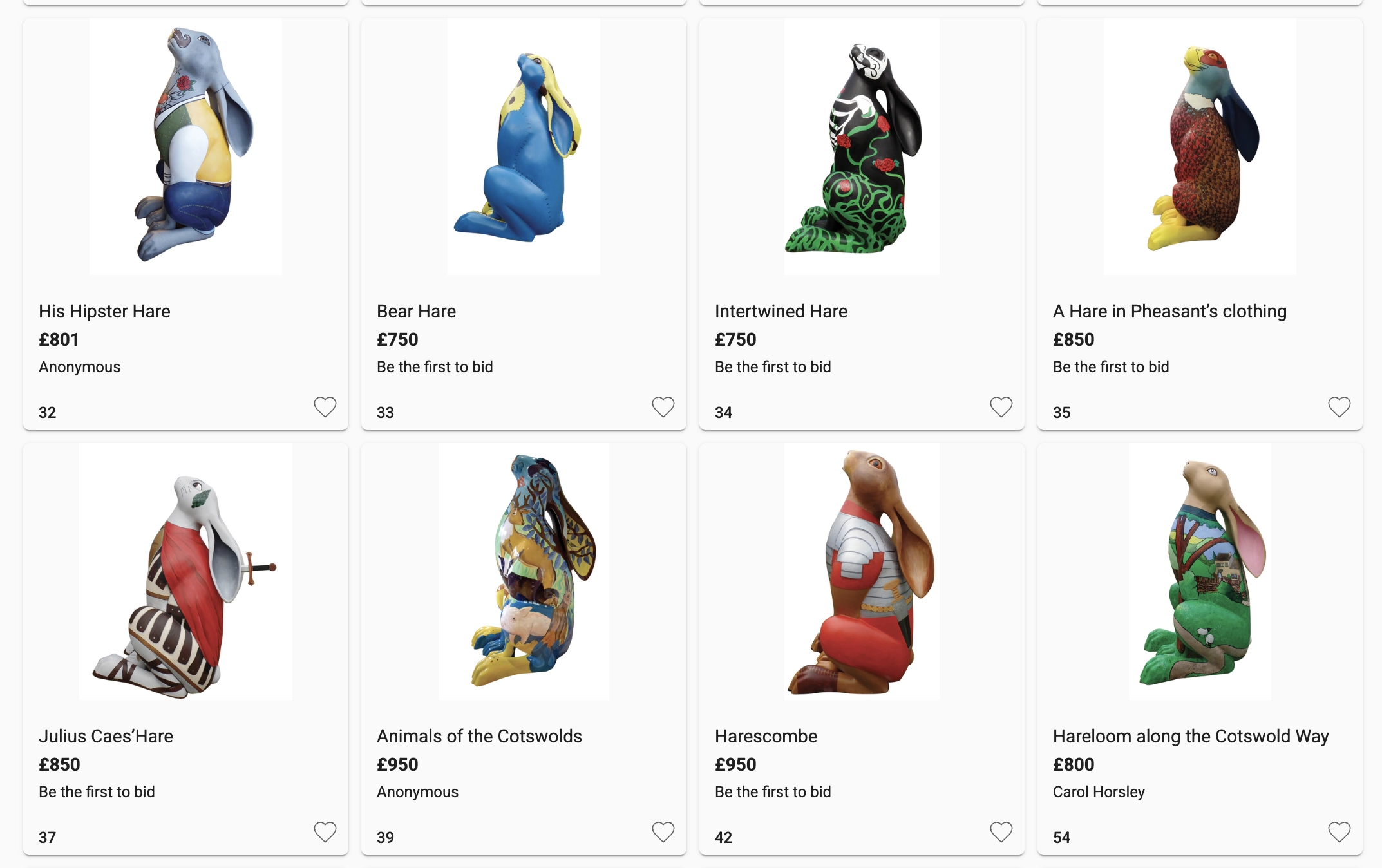
Photo strategy pairs closely with description writing. See the photography section of our auction item descriptions guide for specifics on getting this right per item.
Digital vs Printed Silent Auction Catalogs
Printed catalogs and paper bid sheets still have a place at some events, but they come with real limits: items can only be browsed by guests physically in the room, updates require reprinting, and there's no way to extend bidding to supporters who can't attend.
A digital auction catalog removes those constraints, items can be previewed and bid on before the event, browsed from any device, and updated instantly. We've covered this comparison in depth elsewhere, including how to switch from paper to digital fundraising and what to consider if you're still using bid sheets. For most events today, a hybrid approach — digital catalog with a few printed QR-coded displays for browsing on the night — gets the best of both.
Common Silent Auction Catalog Mistakes to Avoid
- Too many similar items: five different spa vouchers dilute interest in all five, rather than creating five wins.
- No items under $100: locks out budget conscious bidders who want to support the cause.
- No anchor item: nothing to build promotion or excitement around.
- Flat, uncategorized lists: makes browsing, and checkout, harder than it needs to be.
- Launching the whole catalog at once: open bidding early where you can. Pre-event campaigns can generate up to 40% of sales before the event even starts, building momentum and giving quieter items more time to attract interest. Featuring anchor items prominently, and holding some items back to reveal at a strategic moment, keeps energy up through to close.
How GalaBid Helps You Build a Professional Digital Auction Catalog
Building and managing a catalog tracking price tiers, categories, bundles, and increments across dozens of items can be a lot of work. GalaBid's silent auction software is built around exactly this workflow:
- Digital catalog - items can be organized and filterable by category, so bidders find what interests them in seconds.
- Mobile bidding - bidders bid from their own phones, whether they're in the room or joining remotely.
- Real-time bidding - live bid updates and leaderboards keep energy and competition high right through close.
- Online payments - winners pay directly from their phone, with no queues or manual invoicing.
- Auction item management - bulk upload items, set categories, starting bids, and increments in one place.
- Bidder engagement - outbid alerts and reminders keep bidders coming back to the catalog throughout the auction.
- Other item types - raffles, donations, buy nows and event ticketing can all be handled in a single campaign on GalaBid
- Event reporting - see exactly which items, categories, and price tiers performed best, so next year's catalog is even stronger and easier to build.
GalaBid has been supporting nonprofits and individual fundraisers since 2011. The platform is trusted by 25,000 + fundraisers from around the globe. Our friendly and knowledgeable team are ready to help and guide you, feel free to book a call.